The lens that changes colour is doing two different jobs.
Photochromic and electrochromic lenses can both darken, but one responds to light and the other to a control signal. For AR, that difference changes image contrast.
 SmartWearGuide · 2026-10-12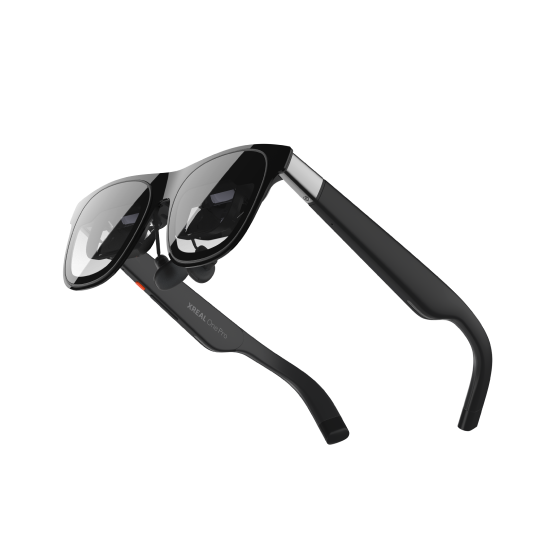
The familiar sunglasses trick is photochromism
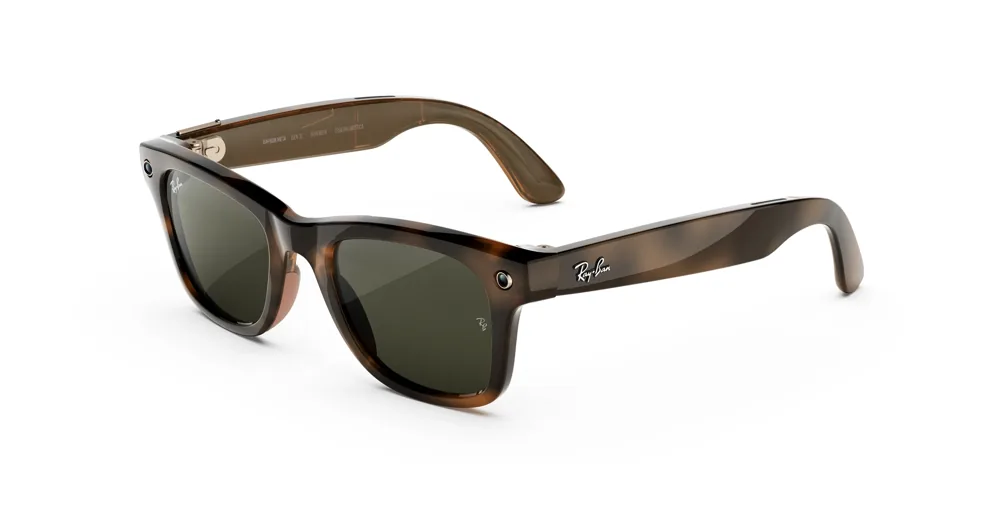
Transitions explains that most photochromic lenses respond primarily to ultraviolet light. Their molecules change in response to exposure, causing the lens to darken outdoors and become clearer indoors. Temperature affects the rate at which that happens. The company also distinguishes products that respond to visible light as well as UV.
This explains a common surprise inside a car: the windshield blocks much of the UV that activates many photochromic lenses. The same frame can therefore look different outside and behind the glass. It is not enough to ask whether smart glasses have adaptive lenses; ask which lens treatment is offered and under what conditions it activates. A lens chosen to follow changing daylight serves a different purpose from a display control chosen to make a film easier to see.
Electronic tint is a control in the display system
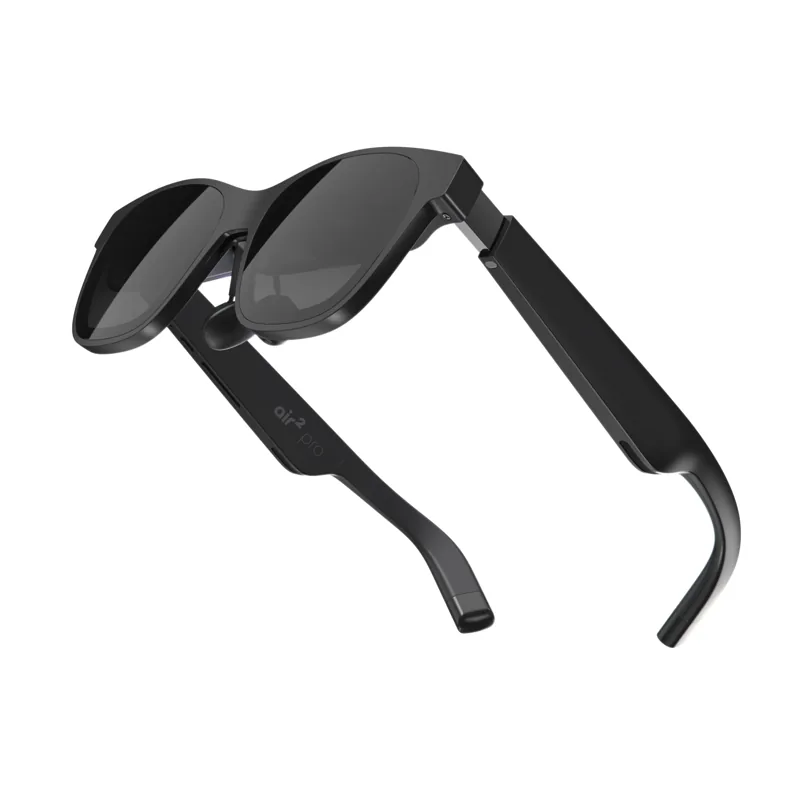
The XREALOne-series quick guide gives electrochromic dimming its own place in the control panel, separate from image brightness and volume. That arrangement lets the wearer alter the amount of surrounding light that passes through, rather than only turn up the image.
Electrochromic materials change optical transmission when electrically driven. Their use in eyewear is valuable because the wearer or system can request a different tinted state without waiting for sunlight to change. The mechanism inside a specific commercial lens is proprietary unless the manufacturer documents it; we do not assume every product uses the chemistry of a research sample. The practical distinction is control. Photochromic eyewear responds to its light environment, while electronic dimming can be part of a deliberate mode change.
XREAL: One series quick guide and tint controls ↗ · Wang et al.: Electro- and Photo-Dual Responsive Chromatic Devices for High-Contrast Dimmers ↗
Darkening the world can improve the image
The 2021 optics review explains ambient contrast as a combination of the displayed image and the real-world light visible through an AR system. One route to stronger contrast is a tunable dimmer; another is a brighter image source and more efficient optics. These are different ways to address the same competition for visual attention.
Our interpretation is simple: a film scene's dark regions are difficult to appreciate if a bright room is shining through them. A tint can reduce that background contribution. It does not add pixels or correct an out-of-focus edge. That makes dimming useful but specific. It can help create a cinema-like mode, while greater transparency may be preferable when checking the surroundings. Neither mode makes an immersive display suitable for every situation merely because the lens can change.
Augmented reality and virtual reality displays: emerging technologies and future perspectives ↗
A research result combines both responses
A 2025 Advanced Materials paper by Wang and colleagues reports a device combining electrochromic and photochromic responses using a photochromic hydrogel electrolyte. Its reported tinted transmission falls below 1.5 percent at 633 nm, with a large difference between tinted and clear states. The work includes researchers from Shandong University and the University of Alberta.
The wavelength is important. A result at one specified wavelength is not automatically a neutral, full-spectrum black lens with consumer-ready durability. The paper presents a materials approach to high-contrast dimming, rather than a product you can order for existing glasses. The interesting idea is that environmental adaptation and electronic control need not be mutually exclusive. It is an example of the optical stack becoming more capable, with further work needed before judging a complete pair of eyewear.
Wang et al.: Electro- and Photo-Dual Responsive Chromatic Devices for High-Contrast Dimmers ↗
The quality question is the clear state
When evaluating a variable tint, it is easy to concentrate on how dark it gets. We would also test the supposedly clear state: whether the room looks natural, whether colour is shifted and how well the wearer can move between the display and nearby objects. A strong dark state is only half of a usable range.
For a demonstration, try three tasks: read a small document in a bright room, watch a scene containing dark detail and look away to speak to someone. Ask whether tint and image brightness can be adjusted independently. Check any automatic switching rather than assuming it follows your attention correctly. These are proposed tests for an integrated product. The result cannot be predicted reliably from the term electrochromic alone or from the darkest laboratory transmission figure.
SmartWearGuide analysis
A useful lens option should solve your lighting problem
For ordinary camera-and-audio glasses, an adaptive lens may mostly be about comfortable vision as daylight changes. For display glasses, electronically controlled tint also participates in how the virtual image appears. Decide which problem you need to solve before paying for the option.
Our recommendation is to compare the exact lens treatment on the exact frame you will buy. Do not substitute a different model's demonstration, and verify prescription choices before assuming the tint option is compatible. A well-designed tint can make a wearable display feel more versatile without changing its resolution. The next compelling advance will combine a useful clear state, a strong dark state, reliable switching and a comfortable physical lens. An impressive transition between two states is the beginning of that story, rather than the entire outcome.
SmartWearGuide analysis
About this article
Original technical explainer checked October 12, 2026, using Transitions, XREAL and optics/materials research. The dual-responsive dimmer is laboratory research, not an available lens upgrade. We do not infer proprietary product chemistry.