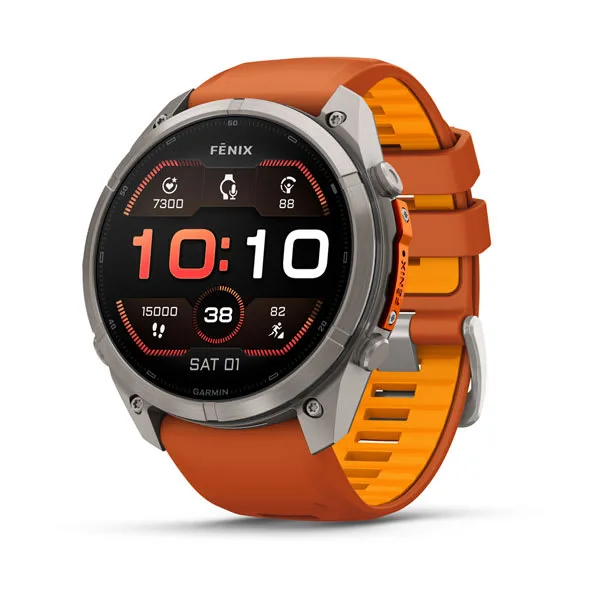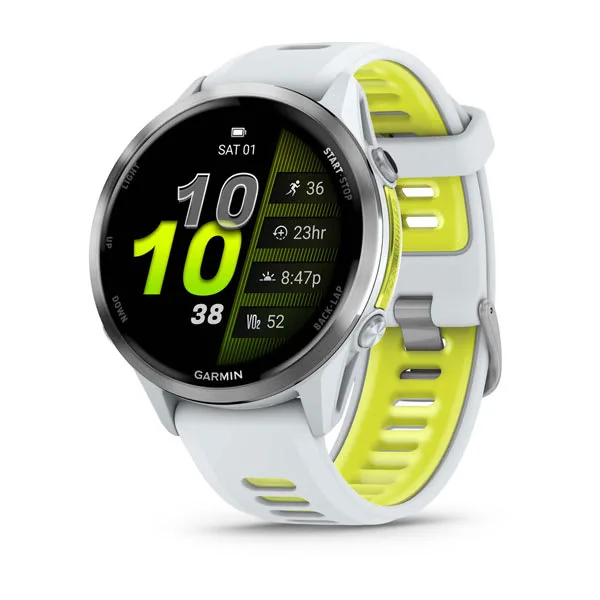
Garmin's MicroLED watch makes the display brighter. Its battery table asks a harder question.
Compare the same 51 mm case, the same display mode and the same activity. The trade-off becomes much more useful than a peak-brightness headline.
 SmartWearGuide · 2026-10-12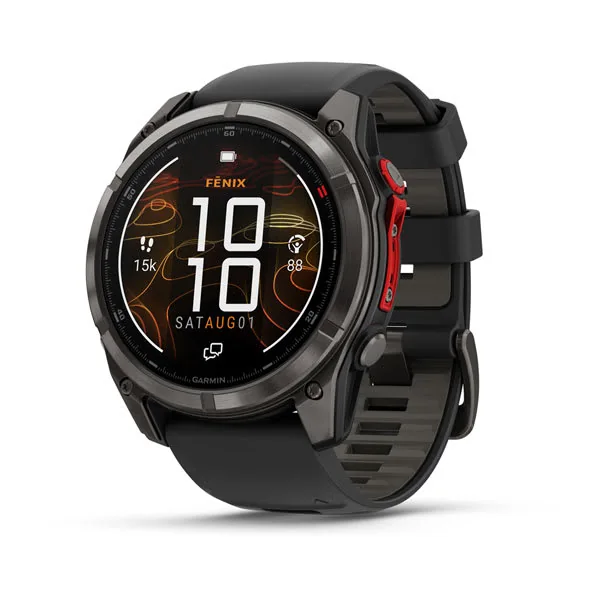
The impressive number has a specific meaning
Garmin introduced the fēnix 8 Pro MicroLED in September 2025, so it is an established experiment rather than a newly announced October product. The 51 mm model is specified at up to 4,500 nits, with more than 400,000 individual LEDs. That suggests a serious ambition for outdoor readability. It does not describe brightness held continuously throughout a long activity.
The current official product specifications and manual give a more interesting buying question: how much display visibility do you need, for how long, and what else must the watch keep doing? Peak brightness is one operating point. A useful wearable also has to sustain navigation, sensing and the way you habitually check its screen. The maximum alone does not settle that system-level compromise.
Garmin: fēnix 8 Pro announcement, September 3, 2025 ↗ · Garmin: fēnix 8 Pro MicroLED 51mm product specifications ↗
Compare like-sized watches before judging the technology
Garmin's September 2026 manual rates the 51 mm fēnix 8 Pro AMOLED at up to 27 days in gesture smartwatch mode or 15 with an always-on display. MicroLED is rated at ten and four days respectively. Comparing MicroLED against a smaller AMOLED case would obscure the choice available at the same size.
Those estimates make MicroLED about 37 percent of the AMOLED model's gesture-mode endurance, or 27 percent in always-on mode. They do not prove the display alone causes the difference: these are complete watches, not matched panels on a laboratory bench. They do show the charging commitment in the manufacturer's own product comparison. A buyer should be able to explain the visibility benefit that compensates for that commitment.
Garmin: fēnix 8 Series battery table, manual v9, September 2026 ↗ · Garmin: fēnix 8 Pro MicroLED 51mm product specifications ↗
The screen mode changes the trip calculation
For GPS-only tracking, the same manual lists 78 hours gesture or 56 always-on for the 51 mm AMOLED Pro, versus 44 or 18 for MicroLED. On the MicroLED model, leaving the screen continuously visible therefore reduces the published maximum to less than half the gesture figure. These are estimates for stated modes, rather than our field results.
That matters when a route requires repeated glances and you dislike raising your wrist to wake a screen. A short training session and an extended trek are different requirements. Choose the display mode you will tolerate during the activity before using a battery figure to plan it. The largest number in a specification sheet can describe a mode you would never willingly use on that particular trip.
Garmin: fēnix 8 Series battery table, manual v9, September 2026 ↗
Always-on is already a brightness compromise
Garmin's display instructions explain that always-on mode keeps watch-face information visible while lowering the brightness and background. Brightness level, wake behaviour and timeout are configurable; the company also recommends lowering brightness or shortening screen time to extend battery life. A headline maximum and an always-on experience are consequently separate things.
For a meaningful demonstration, inspect the watch in direct outdoor light, in its dimmed state and after waking it. Look at a map and the actual data fields you use, rather than a colourful promotional face. If readability improves only when you deliberately wake the display, decide whether that interaction fits your activity. Brightness that is impressive for a moment is valuable only when that moment matches a real need.
Garmin: fēnix 8 Series display settings and battery guidance ↗ · Garmin: fēnix 8 Pro announcement, September 3, 2025 ↗
More radios do not belong inside a display verdict
The Pro family also includes inReach cellular and satellite functions. Garmin says these require an active service plan and are not available in every country. The battery manual separates additional connected modes instead of treating all GPS use as one identical workload. That is a reminder that a premium outdoor watch is doing several jobs beyond rendering pixels.
Do not infer that a lower endurance figure means MicroLED is a failed technology, or that a brighter screen makes every part of the watch better. The product combines a particular display implementation with a particular set of features. To assess progress, future comparisons should retain the same case size, activity settings and display behaviour. Otherwise a change in radios or usage can masquerade as a change in panel efficiency.
Garmin: fēnix 8 Pro announcement, September 3, 2025 ↗ · Garmin: fēnix 8 Series battery table, manual v9, September 2026 ↗
The market signal is the willingness to trade
This product makes an unusually visible compromise: a premium display feature can arrive alongside shorter official endurance. It is tempting to turn that into a prediction that all watches will follow. A more restrained reading is that Garmin has given one group of buyers a different balance to choose, while retaining AMOLED alternatives.
For someone struggling to read a display during brief, bright outdoor sessions, the trade may be attractive. For someone whose favourite feature is forgetting the charger for weeks, the same table points elsewhere. The next convincing advance would improve readability under disclosed conditions while narrowing that endurance gap. Until then, compare the operating mode you will live with, rather than treating the newest display name as an automatic upgrade.
Garmin: fēnix 8 Pro MicroLED 51mm product specifications ↗ · Garmin: fēnix 8 Series battery table, manual v9, September 2026 ↗ · Garmin: fēnix 8 Series display settings and battery guidance ↗
About this article
Original analysis of official Garmin specifications and September 2026 manual estimates, checked October 12. The 2025 launch is historical. Brightness and runtime are manufacturer claims; percentage and ratio comparisons are our arithmetic, not measured display efficiency or battery testing.