The next battery breakthrough may be a pair of glasses doing less.
Firmware modes, intermittent displays and distributed processing point to a quieter route to longer sessions: reduce the work before enlarging the battery.
 SmartWearGuide · 2026-10-12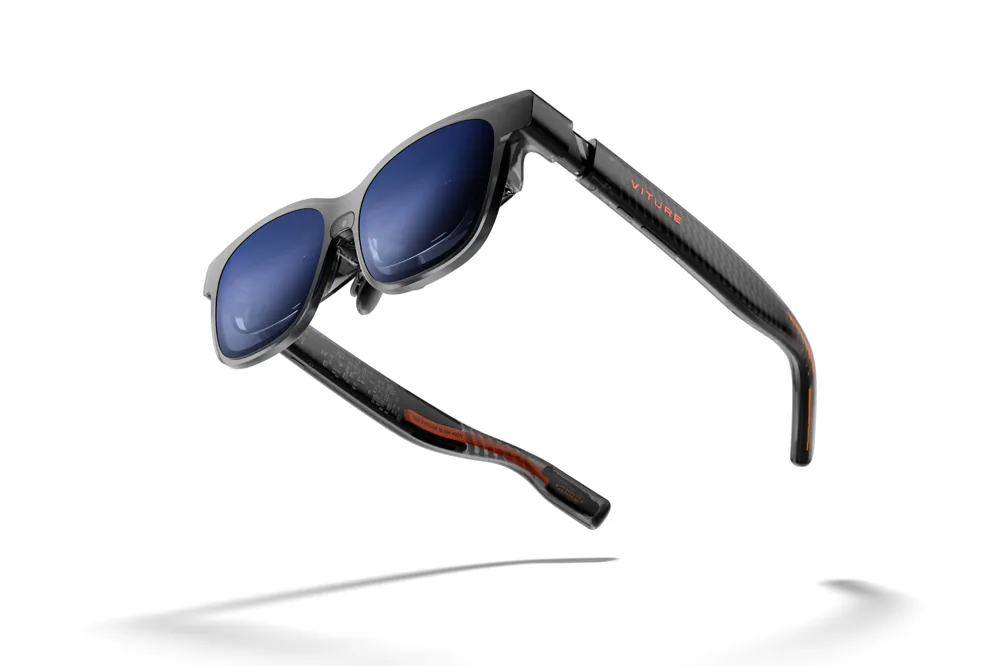
A firmware note is more interesting than it looks
VITURE's September 18,2026 release notes describe a Monoscopic mode intended to reduce heat and power during everyday 2D use. They also explain its limitation: screen distance becomes fixed, and users should return to Stereoscopic mode for distance adjustment or 3D content. The notes do not supply a quantified battery improvement or justify applying the feature to every model without checking compatibility.
The tradeoff is a useful signal of where development is going. Longer viewing does not always require a visibly larger cell or a headline chemistry breakthrough. Sometimes it comes from choosing a simpler operating mode for material that does not need the most elaborate one. That is progress a current owner may be able to benefit from, provided it works on their exact hardware and preserves the experience they need.
Two days can describe mostly quiet time
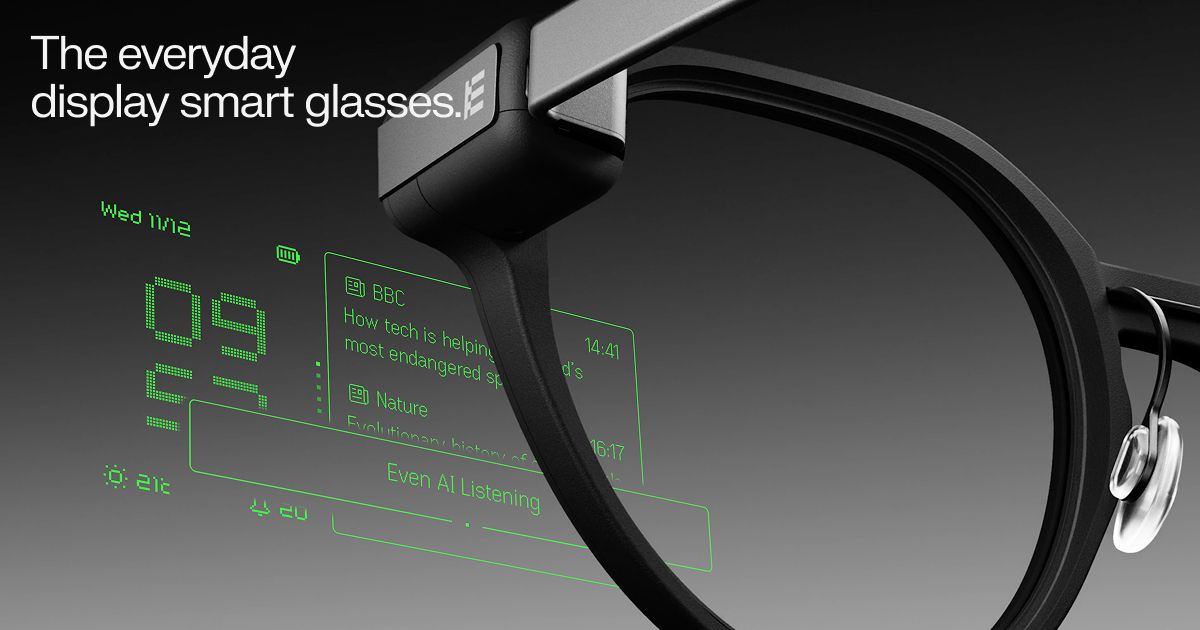
Even's G 2 support page lists 0.744 Wh in the glasses and a two-day claim for intermittent information checks, notifications and navigation. It does not describe 48 hours of a continuously lit display. If we divide the rated energy by an assumed 48 elapsed hours, the rough average is 15.5 mW. This is a calculation from the stated capacity and elapsed time, not a measurement of the active electronics.
The distinction is essential when comparing glasses. A device that spends most of a day waiting can have an impressive elapsed runtime while a film display draws power continuously. Neither manufacturer needs to be wrong for the advertised durations to be incomparable. We want the use pattern beside the number: display-on time, requests, calls, brightness and idle periods. Without those, the longest battery figure may identify the least demanding test rather than the most efficient product.
- 01Battery energyStored energy in Wh
- 02Display and radiosUse power when active
- 03Camera and computeAdd workload-dependent power
- 04Average powerDetermines operating time
Ideal runtime = usable battery energy ÷ average power. Real products also have conversion losses, temperature effects and reserve margins.
SmartWearGuide illustration · Sources in the articleMoving compute moves the burden
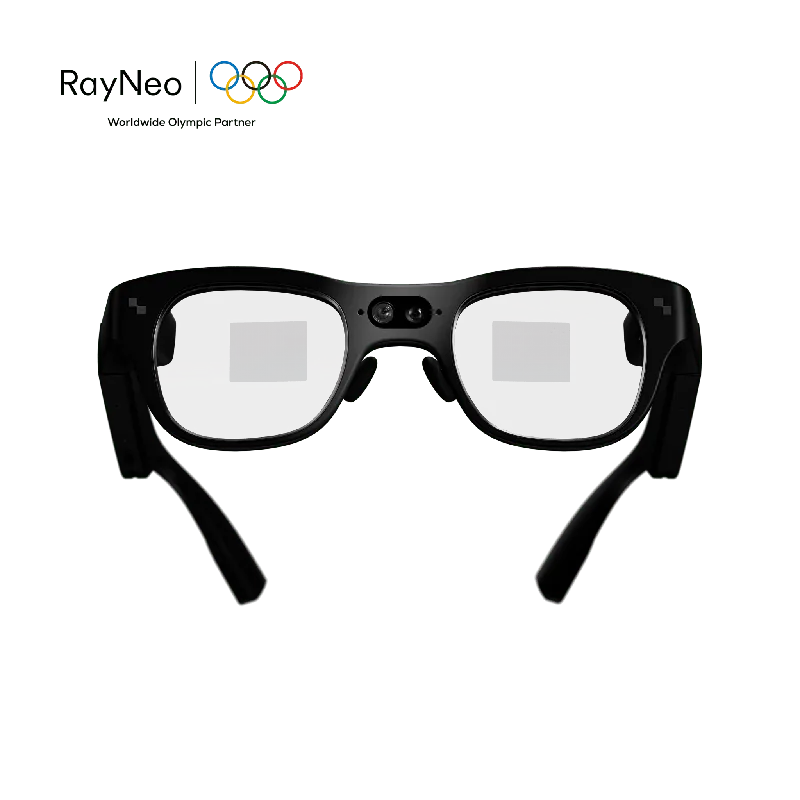
Qualcomm's AR2 documentation describes processing distributed between the glasses and a host such as a phone or laptop, with processors inside the glasses taking latency-sensitive jobs. Its efficiency statements concern the platform and its chosen comparison, not a universal runtime for every finished device.
The architecture changes where energy and heat are spent. It may help make the frame comfortable while placing more work on a phone or pocket accessory. Our inference is that the wearer should compare the system's charging routine, not only the frame's battery. If the glasses last all afternoon but the host dies before the journey ends, the useful session still ended. A genuinely practical arrangement keeps the needed components running together, with a charging option that does not make the cable setup awkward.
Local AI removes a dependency, then creates a test
Qualcomm's June 2025 demonstration ran a small language model on smart glasses without a phone or cloud connection. It is evidence that this class of task can be performed locally in a demonstration. It does not prove that every retail pair offers the same offline assistant, or that local inference is always the lowest-energy way to answer any question.
For a future product, we would ask what the local model can do, when the system falls back to another device and what each mode costs in sustained power. A successful offline answer has an obvious reliability benefit where connectivity is poor. A complex request may still need a different route. The interesting engineering is the choice between those routes, made in a way that the user can understand without studying a processor diagram.
The benchmark we want is a useful afternoon
Our proposed battery comparison starts with the same sequence for each suitable product: a commute, a set of short interactions, a longer media or work session and time in standby. We would record the glasses and any required host separately. Brightness, software version and charging stops should remain visible in the result.
That would reveal tradeoffs a single up-to number hides. Does an economical mode reduce functionality you care about? Does the frame grow noticeably warmer during a particular task? Does an external battery make it easier to finish a journey, or simply add something else to charge? These are proposed measurements. We have not performed them here, and a manufacturer's promise of reduced heat is not the same as an independent thermal comparison.
SmartWearGuide analysis
Efficiency should buy simplicity
The strongest use of a power saving is not necessarily a new record on a specification sheet. It can be a lighter frame, fewer charging interruptions or a predictable routine with one less accessory. Those outcomes are easier for an owner to notice than an isolated claim about a chip's efficiency.
The recent evidence points to several approaches being pursued at once: change the workload, spend more time idle and put the intensive jobs where they make physical sense. We see that as a useful direction, rather than proof that the battery problem has been solved. When a new pair promises all-day use, ask what it is doing all day. The interesting breakthrough is the one that lets the device keep doing your ordinary jobs while asking less attention from you.
SmartWearGuide analysis
About this article
Original analysis checked October 12, 2026, using four manufacturer sources. VITURE's release details were available through an indexed official excerpt; model compatibility requires checking its updater. The 15.5mW estimate uses rated capacity divided by 48 elapsed hours, not measured active power.