YOUR SHORTLIST

Compare wearables

Compare up to 10 devices across categories. Keep the purpose and the source beside the numbers.

How price order works

Lowest recorded store prices take priority over announced or launch prices, within the selected source market. Currencies use the dated EUR reference rates. Deposits and recurring charges are excluded from price order; missing prices stay last. Original price records remain visible.

The differences that matter

Tobii Pro Glasses 2

Legacy binocular eye-tracking research

Tracking
Corneal reflection/dark pupil; one-point calibration ↗
Battery / power
3,400 mAh rechargeable 18650 Li-ion ↗

Keep in mind Original manual v1.1.3 is mirrored by an academic lab; current manufacturer discontinued page confirms identity.

Tobii Pro Glasses 3

Research-grade eye tracking during real-world tasks

Tracking
Binocular corneal reflection/dark-pupil stereo geometry ↗
Battery / power
Rechargeable 18650 Li-ion, 3,400 mAh ↗

Keep in mind No display or consumer AI functions implied. Research data requires appropriate participant consent and analysis.

Published specifications and documented constraints. See the full comparison below for prices and sources.

Scroll across the table to compare every model

Tobii Pro Glasses 2 versus Tobii Pro Glasses 3
Smart glassesAdd a model
Tobii Pro Glasses 2 - Original physical-device photograph of Tobii Pro Glasses 2. SmartWearGuide has not hands-on tested this model.
Smart glasses · TobiiTobii Pro Glasses 2Discontinued
Tobii Pro Glasses 3 - Original physical-device photograph of Tobii Pro Glasses 3. SmartWearGuide has not hands-on tested this model.
Smart glasses · TobiiTobii Pro Glasses 3Research equipment
Prices · all markets
Price not verified
0 offer records & sources

No verified price in this audit.

Price not verified
0 offer records & sources

No verified price in this audit.

Designed forLegacy binocular eye-tracking research ↗Research-grade eye tracking during real-world tasks ↗
Battery / power3,400 mAh rechargeable 18650 Li-ion ↗Rechargeable 18650 Li-ion, 3,400 mAh ↗
Weight45 g head unit including protective lens; 312 g recording unit ↗76.5 g head unit including cable; 312 g recording unit ↗
TrackingCorneal reflection/dark pupil; one-point calibration ↗Binocular corneal reflection/dark-pupil stereo geometry ↗
StorageSDXC/SDHC card ↗SDXC/SDHC card ↗
Form factorEye-tracking glasses and external recording unit ↗Wearable eye-tracking glasses and separate recording unit ↗
Sampling rate50 Hz or 100 Hz system configuration ↗50 Hz or 100 Hz configuration ↗
Scene Camera1,920 × 1,080 at 25 fps; 90° scene FOV ↗1,920 × 1,080 at 25 fps; 106° diagonal FOV ↗
Dimensions179 × 159 × 57 mm head unit ↗153 × 168 × 51 mm head unit ↗
Eye SensorsFour eye-tracking sensors ↗Four cameras, two per eye ↗
MotionGyroscope and accelerometer ↗Not applicable to this category
Runtime120 minutes recording unit ↗105 minutes recording unit ↗
SensorsNot applicable to this categoryGyroscope/accelerometer at 100 Hz; magnetometer at 10 Hz ↗
AvailabilityManufacturer explicitly identifies Glasses 2 as discontinued and replaced by Glasses 3.Manufacturer offers consultation and model documentation. Exact system configuration and quote required; no public purchase amount verified.
Important context
  • Original manual v1.1.3 is mirrored by an academic lab; current manufacturer discontinued page confirms identity.
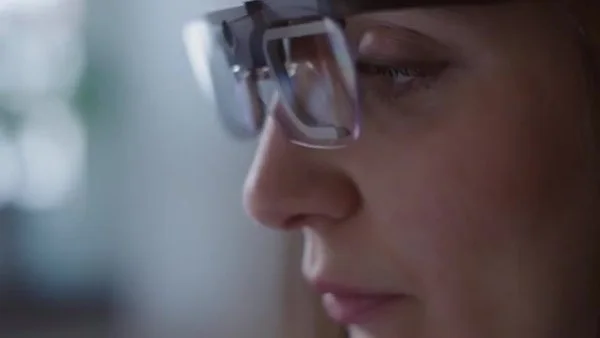
  • Photo is an original manufacturer training-video photograph, not an AR display simulation.
  • No display or consumer AI functions implied. Research data requires appropriate participant consent and analysis.
  • Sampling rate and software vary by system configuration.
Editorial pick & releaseNo editorial ranking recordedNo editorial ranking recorded
EvidenceManufacturer source Checked 2026-10-13Manufacturer source Checked 2026-10-12

Battery claims use different conditions and are not a controlled benchmark. “Not verified” is an evidence gap, not a missing feature. Prices are dated regional snapshots. Deposits, bundles and historical launch prices are labelled. Brightness measurement methods and battery workloads vary by manufacturer.