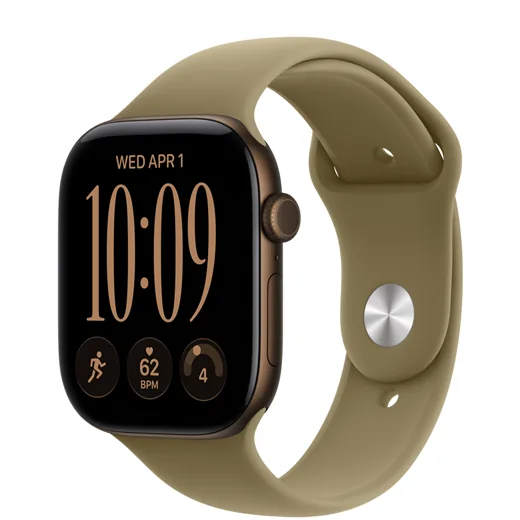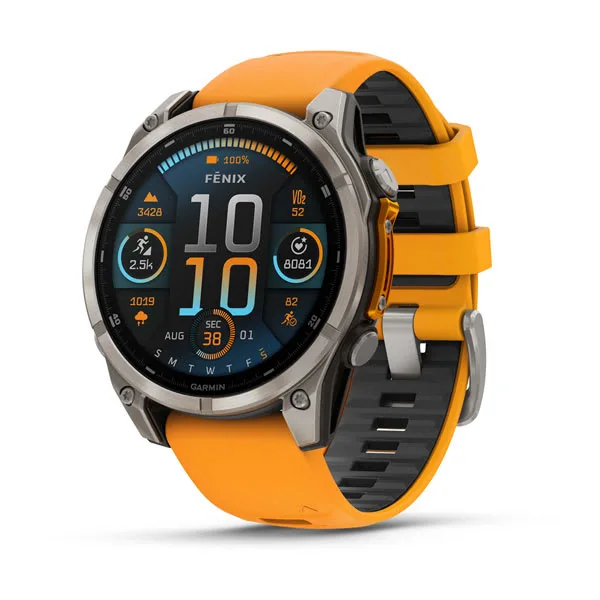
How Garmin and Apple Watch set heart-rate zones, and a free way to check yours
Both start from an age-based estimate of maximum heart rate, which a 99-person treadmill study found can land far from a measured figure. The check is a talk test on your next easy run.
 SmartWearGuide · 2026-10-24
At a glance
The short version: zones are slices of one maximum heart rate, and a default that's off misplaces them all.
Do this first: on an easy run, if your watch says Zone 2 and you can't chat, edit the zones.
Heart-rate zones sort a workout into effort levels, each a slice of one number: your maximum heart rate. In August 2025, Tom's Guide's Nick Harris-Fry, who reviews sports watches, spelled out what a default setup would do to him: the standard age formula gives a maximum of 184 beats per minute, while his own is nearer 174, so every zone would be misplaced. The good news for beginners is that one number is easy to check.[1] [2]
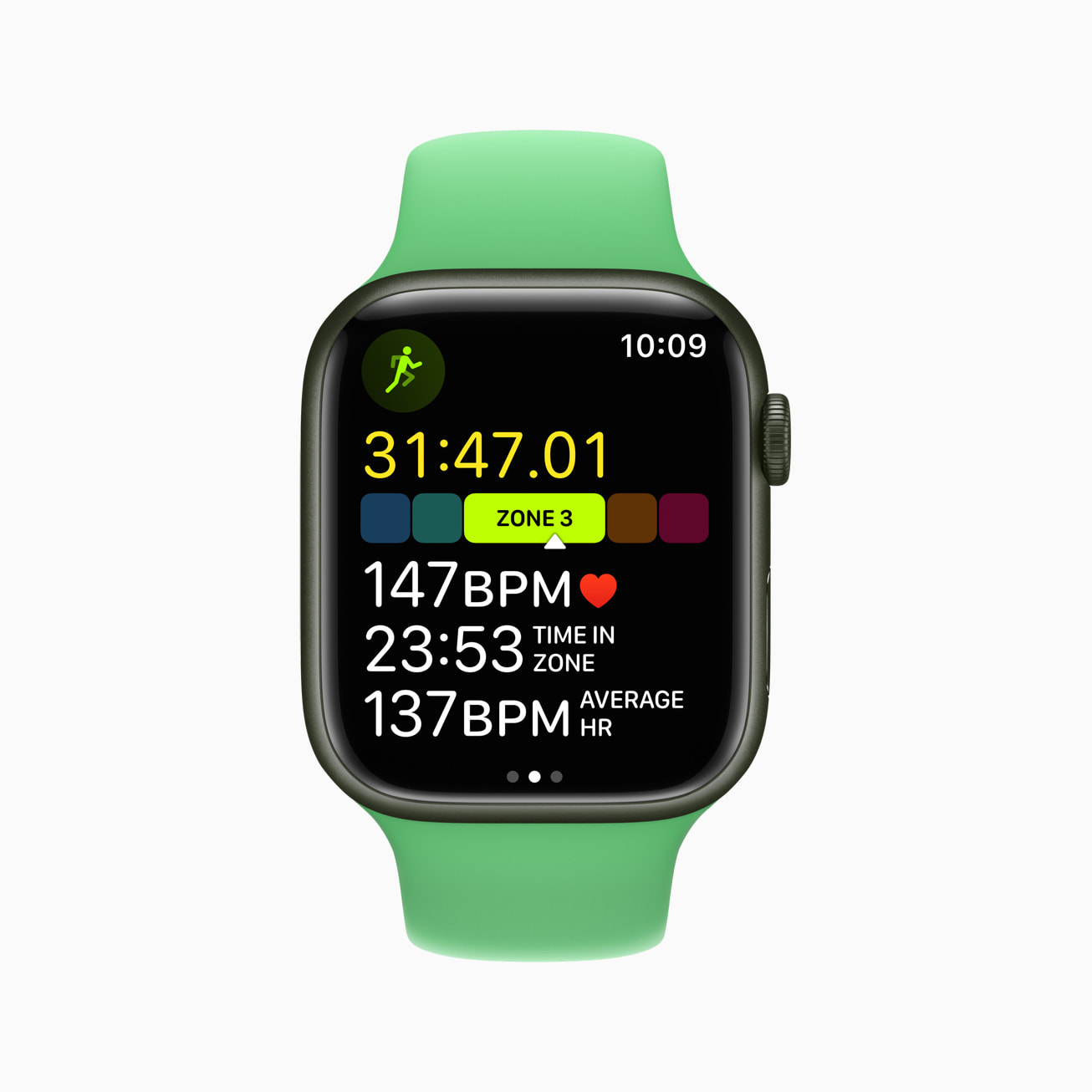
Apple Watch shows five zones, according to Tom's Guide, from 50-60 percent of maximum up to 90 percent and above. In a workout, the Heart Rate Zone view, a turn of the Digital Crown away, shows your zone, heart rate, time in zone and average, and the iPhone's Fitness app graphs time in each zone afterwards. The starting maximum comes from the date of birth Apple requires, and Garmin's manual likewise builds default zones from the profile you enter at setup.[3] [2] [4]
The maths differs between watches, and the difference moves your zones. Garmin's quatix 8 manual lets you set zones in beats per minute or as a share of maximum, heart rate reserve (maximum minus resting rate) or lactate threshold (the effort where fatigue builds quickly). Tom's Guide and Training Today say Apple's automatic zones use heart rate reserve, refreshed monthly, though Apple's own guide just says percentage of maximum. With Training Today's example of 168 maximum and 50 resting: simple arithmetic puts a 60-70 percent band at 101-118 beats per minute against maximum, but 121-133 against reserve.[4] [3] [5] [2]
The starting estimate can be far off. A 2020 International Journal of Exercise Science paper compared nine age formulas with 99 treadmill tests to exhaustion. Four, including 220 minus age, showed minimal average bias, yet across all nine the span between upper and lower limits of agreement, the band most people's errors fall inside, averaged about 44 beats per minute. Errors run both ways: Training Today's Ian Blackburn wrote in March 2024 that his Apple Watch showed 167 though he regularly hits 170 or more.[6] [5]
The free cross-check is the talk test, which traces back to 1937 advice that British mountaineers should not climb faster than they could speak. Blackburn's colleague Ade maps it to zones: Zone 2 allows a normal conversation, Zone 3 a full sentence, Zone 4 a word or two. A 2023 Journal of Exercise Rehabilitation study, with a small sample of 17 healthy young adults, had them walk a treadmill at rising incline and report whether they could speak comfortably, while each stage tracked heart rate, oxygen use and breathing.[7] [5]
That makes a short routine. Find the maximum your watch uses (Settings, then Workout, then Heart Rate Zones on Apple Watch; the User Profile heart-rate screen on a recent Garmin), compare it with the highest reading from your hardest workouts or an all-out 5K, as Harris-Fry suggests, and enter your own figure if they differ. Zones guide training and aren't a health measure. On your next easy run, if the watch says Zone 2 and you can't chat, edit the zones.[2] [4] [1]
Sources
- Nick Harris-Fry / Tom's Guide: I review sports watches for a living and this free Garmin app makes heart rate training more fun, 11 August 2025 ↗
- Apple / Apple Watch User Guide: View Heart Rate Zones on Apple Watch (undated page, read 13 October 2026) ↗
- Jane McGuire / Tom's Guide: How to use your Apple Watch to track heart rate zones, first published 19 May 2023, last updated 4 October 2024 ↗
- Garmin / quatix 8 Series owner's manual: Setting Your Heart Rate Zones (undated page, read 13 October 2026) ↗
- Ian Blackburn / Training Today newsletter: How Accurate are Apple Watch Heart Rate Zones?, 11 March 2024 ↗
- Daniel Shookster et al. / International Journal of Exercise Science: Accuracy of Commonly Used Age-Predicted Maximal Heart Rate Equations, 1 September 2020 ↗
- Yonghyun Kwon, Kyung Woo Kang, Jong Sung Chang / Journal of Exercise Rehabilitation: The talk test as a useful tool to monitor aerobic exercise intensity in healthy population, 28 June 2023 ↗