Sports-watch battery life: compare the week you train, not the largest number.
Daily GPS, an always-on screen and solar conditions explain why three Garmin watches produce very different routines.
 SmartWearGuide · 2026-10-12
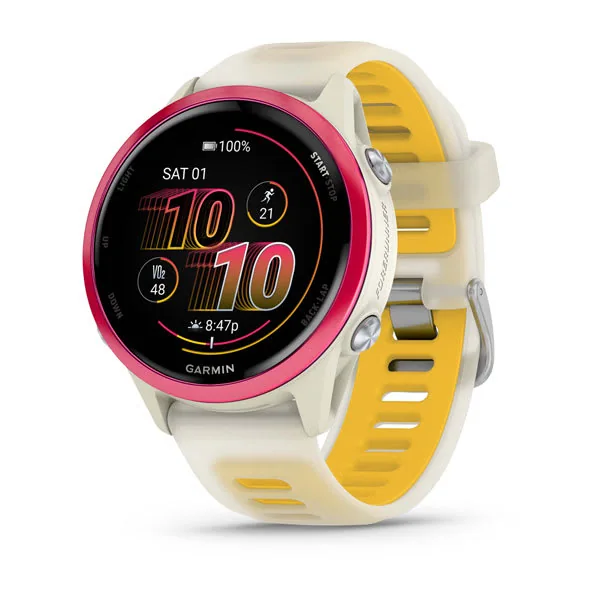
Conor Allison’s June 2025 Wareable review of the 42 mm Forerunner 570 returned about three days between charges with its always-on screen, daily runs and gym sessions. He had obtained about four from the older 265. Tracking itself was convincing: recorded distances stayed close to his Forerunner 970, and heart-rate averages broadly matched Garmin’s HRM 600 during runs. The bright display did not make the smaller watch an endurance upgrade. Turning it on only when raising a wrist changes the comparison substantially.[1]
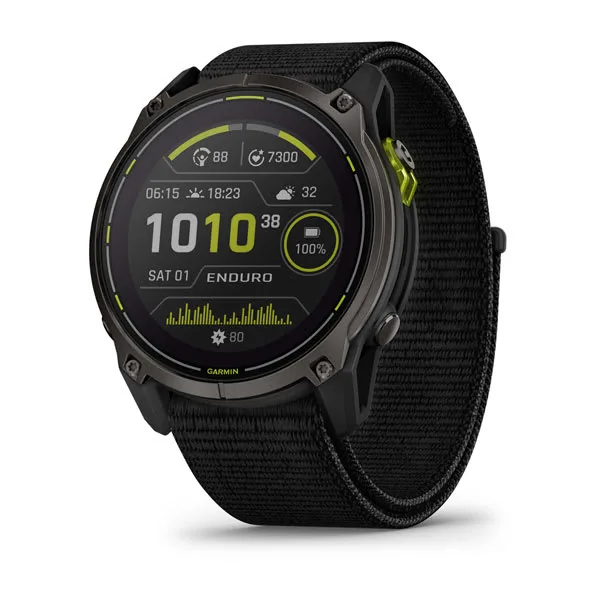
Nick Harris-Fry’s September 2024 Enduro 3 test lasted seventeen days on the first charge while he ran on all but one day. London gave its solar panel much less exposure than Garmin’s headline solar conditions. He found the MIP display competitive in bright sunlight, while preferring the brighter AMOLED alternative in most other conditions. The Enduro also omitted the microphone and speaker. Its long interval between charges came with choices about daily interaction and appearance, not just a larger number on the same watch.[2]
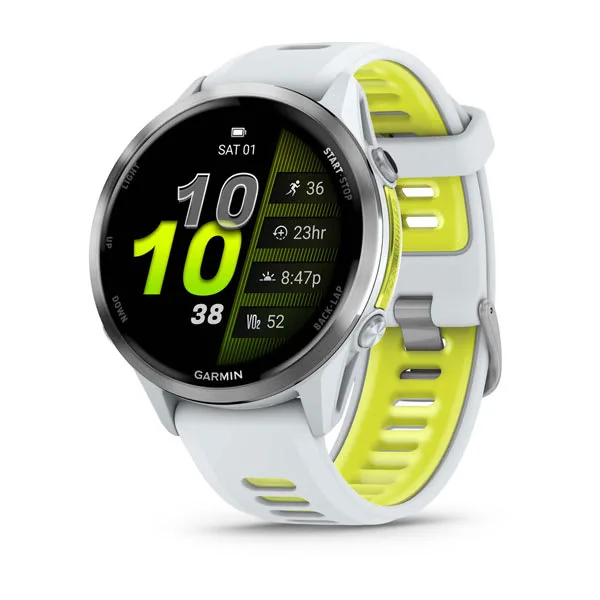
Craig Randall reached a different compromise after four months with the Forerunner 970, reported in April 2026. During ordinary running months he charged about every eight to nine days, usually with roughly 15% remaining. He valued its maps, training tools and wearability, but placed it below the longest-running ultra watches for multiday efforts. That account is useful for regular training; it should not be converted into eight days of continuous GPS recording or compared directly with the 570’s always-on test.[3]
Garmin’s figures make the missing conditions explicit. The 42 mm 570 is rated for ten smartwatch days and eighteen GPS-only hours; the 970 for fifteen days and twenty-six GPS-only hours. The Enduro 3’s thirty-six-day smartwatch claim becomes ninety with solar only under its prescribed exposure: three hours each day at 50,000 lux. Its GPS solar figures assume continuous exposure. Cloud, sleeves and indoor time are therefore part of the battery specification.[4] [5] [6]
Use the longest activity in your calendar to choose a GPS mode, then check ordinary training-week reports with similar screen settings and case size. Leave room for a delayed finish and a battery that has aged. If the watch will mostly track short runs, a smaller comfortable case may earn its charging stops. If finding a socket halfway through an event would be difficult, endurance deserves priority over speaker calls or a brighter daily watch face.